How to Winterize an Outdoor Faucet in the GTA
Reviewed by John and Andrei Dima, Dima Plumbing. John Dima is a licensed Red Seal master plumber serving Toronto and the GTA.
Here is how to winterize an outdoor faucet: disconnect the garden hose, turn off the water supply to the spigot at its shut-off valve inside the house, open the outdoor faucet so the pipe drains, and leave it open until spring. On a frost-free hose bib, you still take the hose off, then turn the handle back to closed. Each outdoor spigot takes about ten minutes, and winterizing your outdoor faucets before freezing temperatures settle in protects your outdoor plumbing from costly repairs and water damage.
Most burst pipes we see behind an outside faucet come from one skipped step. This guide covers the steps, plus the tricky cases: no inside valve, a frost-free bib, a tap that already froze, and the spring check that shows whether the pipe split.
Key Takeaways
- Disconnect the hose, close the inside shut-off valve, open the outdoor faucet to drain it, and leave a standard faucet open until spring.
- Leaving a hose on a frost-free hose bib defeats its design: water stays in the long barrel inside the wall and splits it.
- Open the small bleeder cap on the inside valve, if there is one, so the last water between the valve and the exterior wall drains.
- The City of Toronto asks residents to protect pipes once overnight lows are forecast below minus 10 °C. Winterize well before that.
- A split frost-free spigot often looks fine until you first use it in spring, when water runs inside the wall.
Why Do Outdoor Faucets Freeze and Cause Burst Pipes?
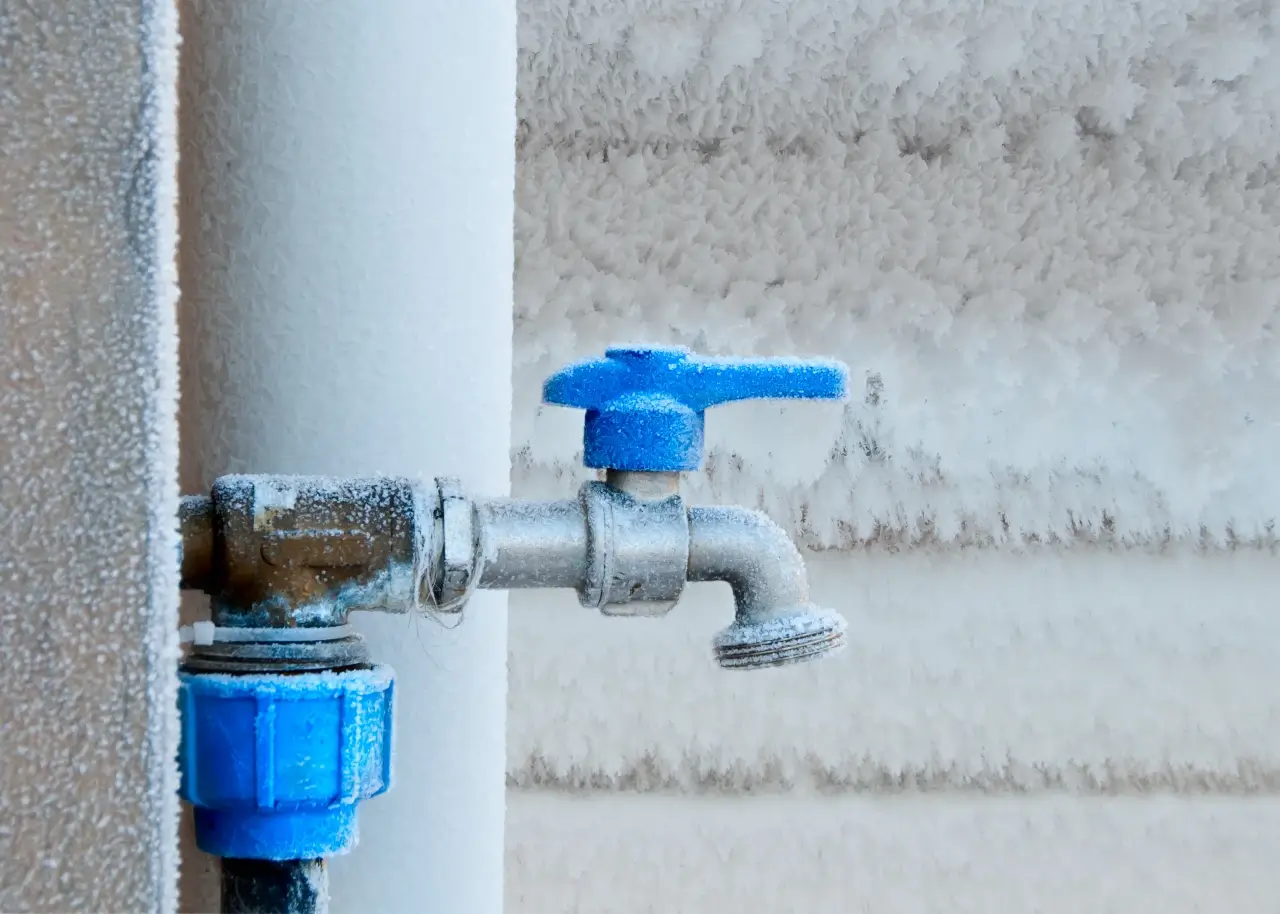
Ice takes more room than water. When the line behind an outdoor faucet is still full, the ice has no space and splits the pipe.
An outdoor faucet sits in the exterior wall, exposed to cold air on one side, so it carries more risk of freezing than any pipe indoors. When freezing weather arrives, any water in the line turns to ice. As the water expands into ice, it pushes hard enough to crack copper. That is how burst pipes and frozen pipes start at an outside tap. Draining the line is how you prevent freezing and bursting, because there is no water left to expand.
Is Your Outdoor Spigot Frost-Free? How to Tell
A frost-free hose bib has a long body running through the wall, so it closes inside the warm house. A standard faucet closes outside.
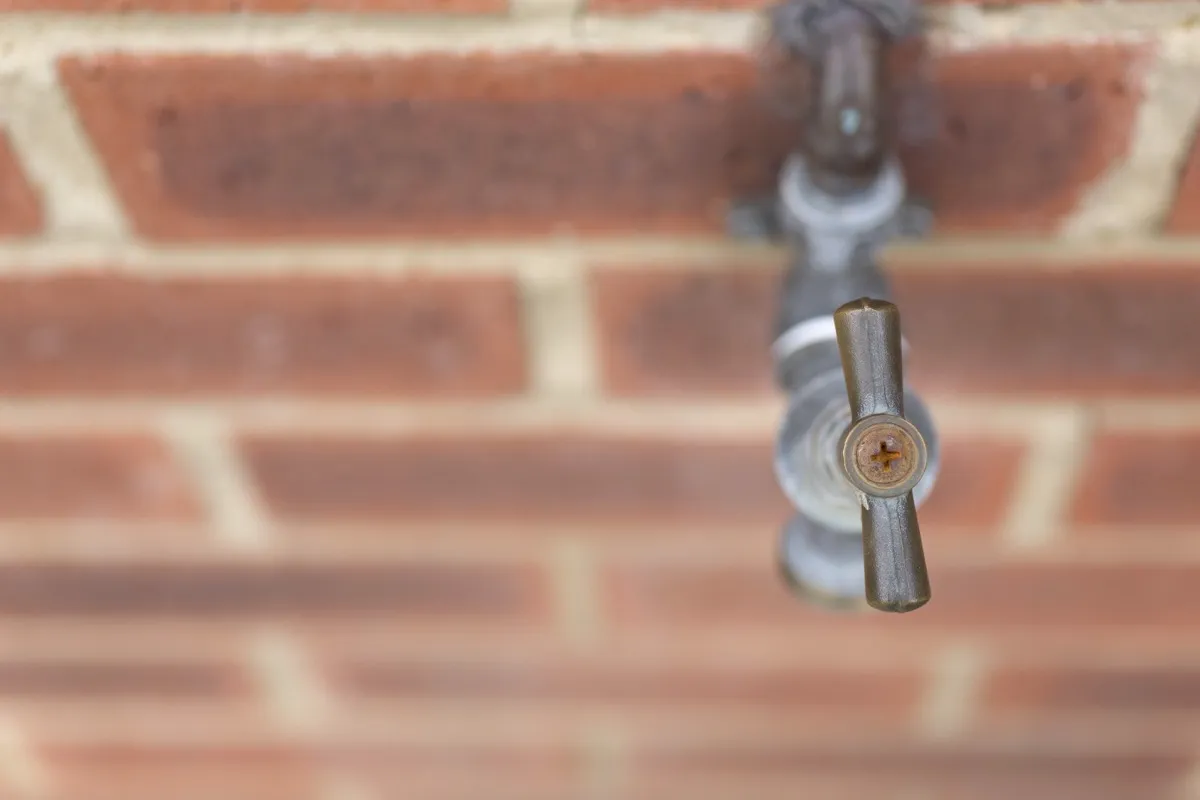
Look where the pipe for the outdoor spigot enters the basement or crawl space. A long brass or copper tube running 15 to 30 cm into the wall means it is frost-free. A separate valve on the pipe a short distance before the wall usually means a standard faucet. You can also listen: a frost-free bib drains a little water from the spout for a few seconds after you close it.
Hose bib, sillcock, spigot and outside faucet all mean the same fixture. The type of faucet decides how you winterize it, because what matters is where the valve closes.
Steps to Winterize an Outdoor Faucet
Remove the hose, close the inside shut-off valve, open the outdoor tap, drain the bleeder cap, and leave the outdoor tap open until spring.
- Disconnect the garden hose. Remove splitters, timers and nozzles too. Let it empty out, then coil it up indoors for the winter. Water inside the hose can freeze and damage the faucet.
- Turn off the water supply. Find the shut-off valve (also called a shutoff or stop valve) for that spigot, usually in the basement ceiling or behind an access panel in line with the exterior wall. Turn it clockwise until it stops, or turn a lever valve across the pipe.
- Open the faucet outside fully. The water in the line runs for a few seconds and stops. If it keeps flowing after a minute, the inside valve is not sealing and needs repair.
- Drain the bleeder cap. Many inside valves have a small brass cap on the side. Hold a container under it, unscrew it, let the remaining water drain, then screw it back on snugly once the water has drained.
- Leave the outdoor faucet open. An open tap lets leftover water drain and expand instead of cracking the pipe.
- Repeat for all exterior faucets. Many GTA homes have two. Missing one leaves that pipe full of water all winter.
A seized valve, or one that leaks at the stem, should not be forced. A valve that breaks in November turns a ten-minute job into a whole-house shut-off. That is the time to book outdoor faucet repair or replacement.
Winterizing a Frost-Free Hose Bib
Take the hose off, let the barrel drain, and close the handle. A hose left attached is the main reason frost-free hose bibs split.
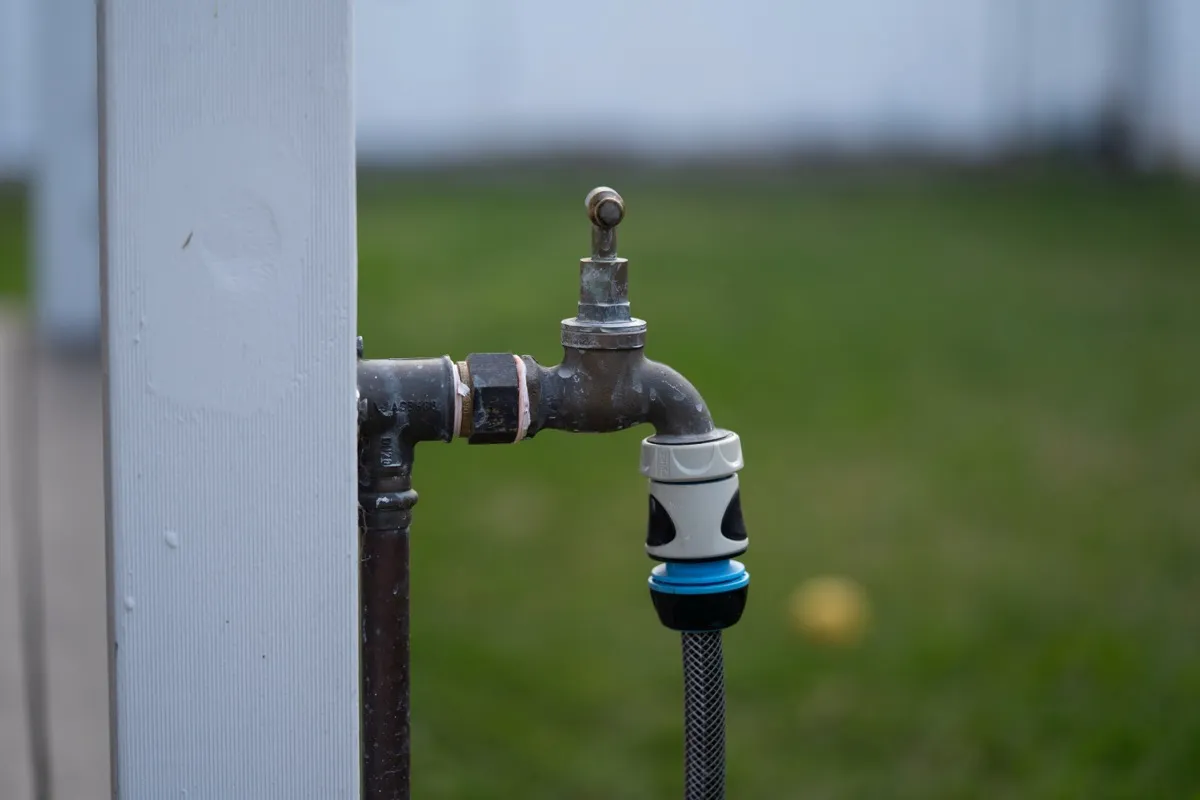
Frost-free outdoor faucets, sometimes sold as a freeze-proof spigot, close deep inside the heated wall. A frost-free hose bib has a tube that slopes down to the outside, so water drains every time you close it. That only works when the spout is open to the air. Leave a hose attached, and you trap water inside that long barrel, where it sits in the cold exterior wall, freezes and splits the tube. Because the valve is inside, nothing leaks until spring, and then the water comes out inside the wall.
Remove the hose, open the tap for a few seconds, turn off the faucet, and give the water time to drain from the spout. If the bib also has an indoor valve, closing it on an older home or a north-facing wall adds a second layer of protection. The small vacuum breaker on top of many bibs drains on its own once the hose is off. If it is held with a set screw, leave it in place.
Should You Leave the Outdoor Faucet Open or Closed in Winter?
Leave a standard outdoor faucet open all winter after closing the inside valve. Leave a frost-free hose bib closed, with the hose disconnected.
The answers differ because the valves sit in different places. An open standard tap lets the short pipe outside the valve drain. A frost-free bib already drains when closed. Do not leave an outdoor spigot dripping to stop it freezing: with water still feeding it, the drip freezes at the spout and the ice works back into the wall.
What If the Outdoor Faucet Has No Inside Shut-Off Valve?
Without an inside shut-off valve, a standard outdoor faucet stays full of water all winter. A plumber can add a valve or a frost-free bib.
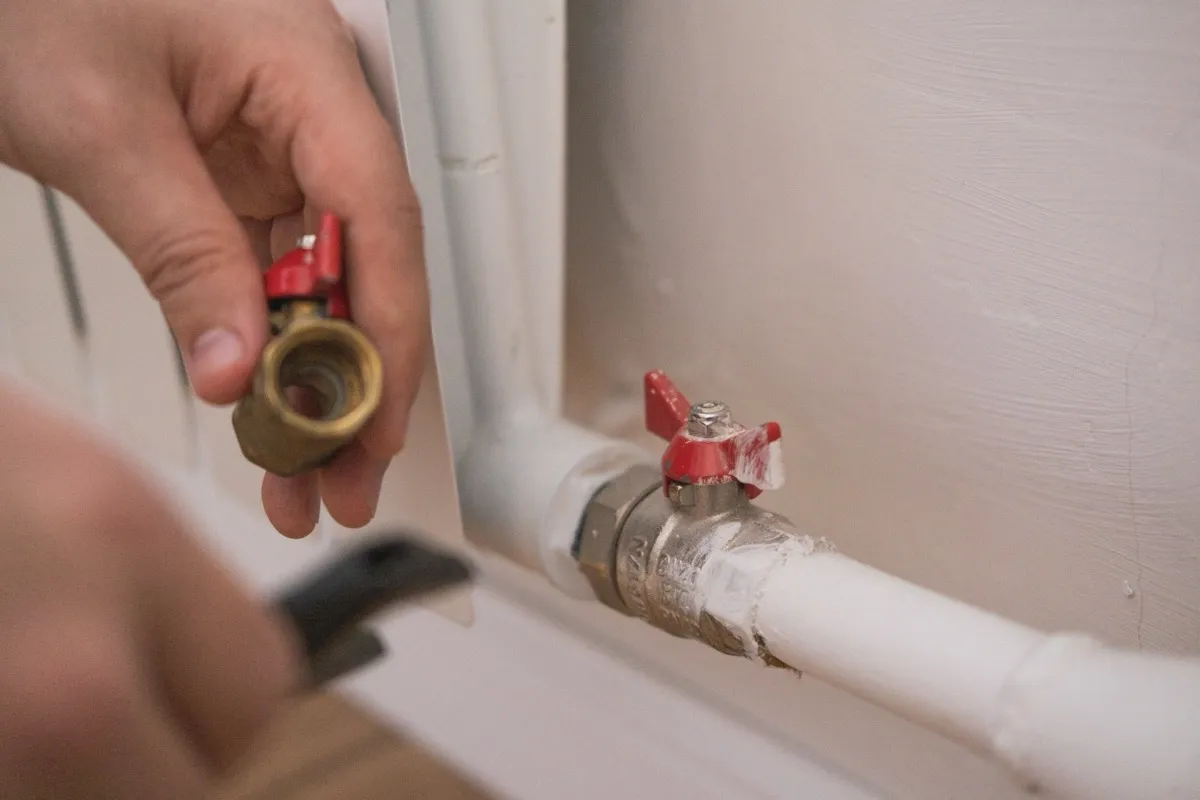
Some older GTA houses and renovations have an outdoor faucet with no interior shut-off valve. Ontario's plumbing rules call for a pipe that supplies water through an exterior wall to have either a frost-proof hydrant with its own shut-off inside, or a shut-off valve with a drain inside near the wall. Older work does not always meet that.
The real fix is a shut-off valve with a bleeder, or a frost-free hose bib. Until then, disconnect the hose and insulate the spigot with a cover. That lowers the chance of freeze damage on a sheltered wall, but it is not a fix.
When Should You Winterize Outdoor Faucets in the GTA?
Winterize after your last fall watering and before nights are forecast below minus 10 °C, the City of Toronto's trigger for frozen-pipe warnings.
Water freezes at 0 °C, but an outside faucet usually needs a sustained cold night before it could freeze solid, and a tap on an exposed, windy wall is more likely to freeze. The City of Toronto gives the same advice: take outdoor hoses off, shut the outdoor supply if it has its own valve, and open the outdoor taps so they drain.
Our advice is to skip the forecast and winterize your outdoor faucets the same weekend the patio furniture goes into storage. In most years, that falls between late October and mid-November, well before the first hard freeze.
Do Outdoor Faucet Covers Help?
Insulated outdoor faucet covers slow heat loss, but they cannot stop a tap with water in it from freezing. Shut off and drain first.
Insulated covers are a cheap extra layer for a spigot on a windy wall or a frost-free bib that needs some margin. They do not replace draining the line, and they only protect your outdoor spigot once the water is off. Towels, rags and plastic bags wrapped around the faucet hold moisture against the metal and freeze solid.
Forgot to Winterize, or the Spigot Is Already Frozen?
If the tap is not frozen yet, winterize it now. If it is frozen, close the inside valve, open the tap, and warm it gently.
- Close the inside shut-off valve so a split pipe cannot flood when the ice melts.
- Open the frozen faucet outside.
- Warm the faucet and wall with a hair dryer. Keep torches and any open flame away from the tap and the siding.
- Once it thaws, check the basement side of the wall for drips or damp drywall.
If you find water inside, close the valve for the whole house at the main shut-off to limit potential water damage, and call a plumber. Frozen and burst pipes are part of our pipe repair service.
How to Tell If the Hose Bib Cracked or Burst Over Winter
In spring, open the inside valve, then open the outdoor tap while someone watches the basement wall. Water inside means a split pipe.
This is the check we recommend most, because a frost-free spigot that split in January often shows nothing until its first use. Other signs: weak pressure at the spout, water spraying from the vacuum breaker, or a leak that only runs while the tap is open. A split bib cannot be patched reliably. It gets replaced, which is a good moment to upgrade a standard faucet to frost-free.
What It Costs If the Hose Bib Needs Replacing
Replacing an outdoor faucet in the GTA usually starts around $250 and can go up to $500 or more, depending on access and pipework.
A straight swap with easy access sits at the low end. The price rises when a wall or ceiling must be opened, a frost-free bib needs a longer pipe run, or a shut-off valve is added. We quote before starting. Send photos of the spigot and the basement side through the form, and we can usually tell you what it needs before we arrive. It is often quick: one customer review on our pipe repair page describes John replacing a rusted outdoor faucet in under 30 minutes and leaving winter tips.
Frequently Asked Questions
Do frost-free outdoor faucets need to be winterized?
Yes, lightly. Disconnect the hose, let the barrel drain, and leave the handle closed. A hose left attached is what splits most frost-free hose bibs.
Is it bad to leave a hose on the spigot in winter?
Yes. An attached hose stops the faucet from draining, so water sits in the tap and its pipe, freezes, and can crack both. Disconnect it.
At what temperature will an outside faucet freeze?
Water freezes at 0 °C, but an outdoor faucet usually needs several hours of sustained frost to freeze solid. Wind makes it happen sooner.
Can pipes still freeze if the water is turned off?
Yes, if water is left in them. Closing the inside valve stops new water, but you still drain the pipe through the tap and bleeder.
Do insulated outdoor faucet covers work?
They help a drained faucet hold heat and block wind. They do not protect a tap that still has water or a hose in it.
How much does a plumber charge to replace a frost-free spigot?
In the GTA, it usually starts around $250 and can go up to $500 or more, depending on access, pipe length, and any added valve.
Need an Outdoor Faucet Repaired or Replaced in Toronto or the GTA?
If your outdoor spigot has no inside shut-off, will not stop running, or has split over winter, call Dima Plumbing at (647) 289-9576 or send up to three photos through the form. We serve Toronto, Markham, Richmond Hill, Vaughan, Woodbridge, Thornhill, North York, Scarborough, East York, Etobicoke, Mississauga, Brampton, Pickering, Ajax, Whitby, Oshawa, Aurora, Newmarket, and Whitchurch-Stouffville.
Contact Dima Plumbing
John Dima
Certified "Red Seal" Master Plumber serving Toronto and GTA, with more than 30 years of experience in plumbing.